← back to projects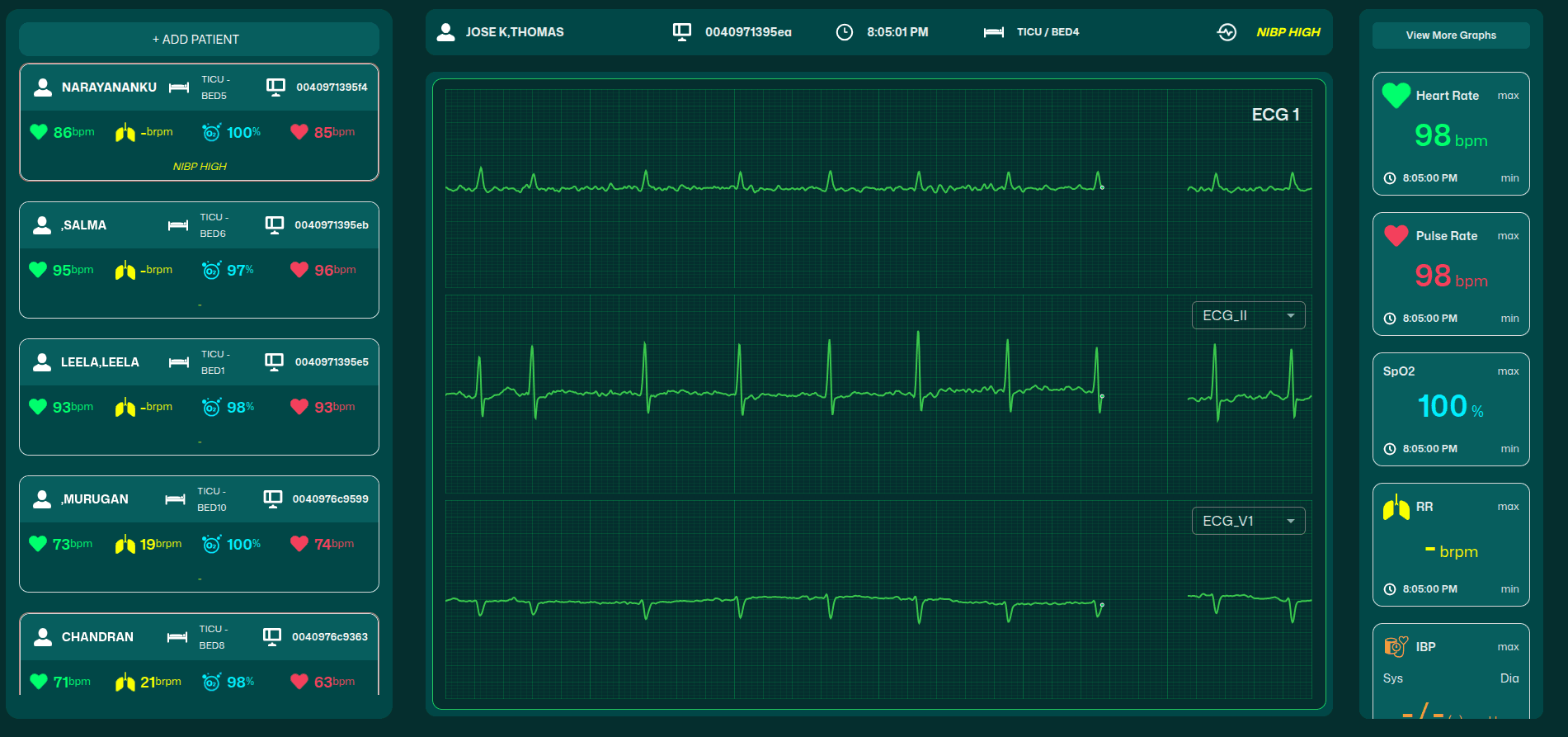
live2025
Real-Time ECG Monitoring & Visualization Platform graph
A real-time ECG monitoring system that streams and visualizes continuous biosensor data with buffering and network recovery for uninterrupted medical analysis.
// tech stack
AngularRxJSWebSocketSCSS
// about
Overview
This project is a real-time ECG monitoring and visualization platform designed to display continuous biosensor data for medical analysis. The system receives high-frequency ECG signals via WebSocket and renders them dynamically for doctors to analyze patient vitals over time.
Problem Statement
Handling continuous, high-frequency ECG data in real time presents multiple challenges:
- ▹Maintaining smooth UI rendering without performance lag
- ▹Handling network interruptions without losing data continuity
- ▹Synchronizing missed data accurately after reconnection
- ▹Providing precise time-based navigation for medical analysis
Solution
I designed and built a frontend system that ensures accurate, real-time ECG visualization with reliability and performance in mind.
Key Implementations
1. Real-Time Data Streaming
- ▹Integrated WebSocket-based communication to receive continuous ECG data streams
- ▹Managed high-frequency data updates efficiently to avoid UI blocking
2. Buffering & Network Recovery
- ▹Implemented a buffering mechanism to handle temporary network interruptions
- ▹Ensured data synchronization after reconnection to maintain continuity
- ▹Prevented data loss and visual inconsistencies during unstable connections
3. High-Performance Graph Rendering
- ▹Optimized rendering logic to handle continuous data updates smoothly
- ▹Avoided unnecessary re-renders for better performance
- ▹Ensured real-time responsiveness even with large data streams
4. Timeline-Based Navigation
- ▹Built an interactive timeline allowing users to select specific time ranges
- ▹Enabled doctors to analyze ECG data at precise timestamps
5. Multi-Metric Visualization
- ▹Integrated multiple medical data streams (ECG leads, vitals)
- ▹Displayed synchronized charts for comprehensive analysis
Impact
- ▹Enabled reliable real-time monitoring of patient ECG data
- ▹Improved system stability under network fluctuations
- ▹Delivered smooth and accurate visualization for medical decision-making
Key Learnings
- ▹Handling real-time systems requires careful performance optimization
- ▹Network instability must be considered as a primary design factor
- ▹Efficient data handling and rendering are critical for user experience in high-frequency systems